

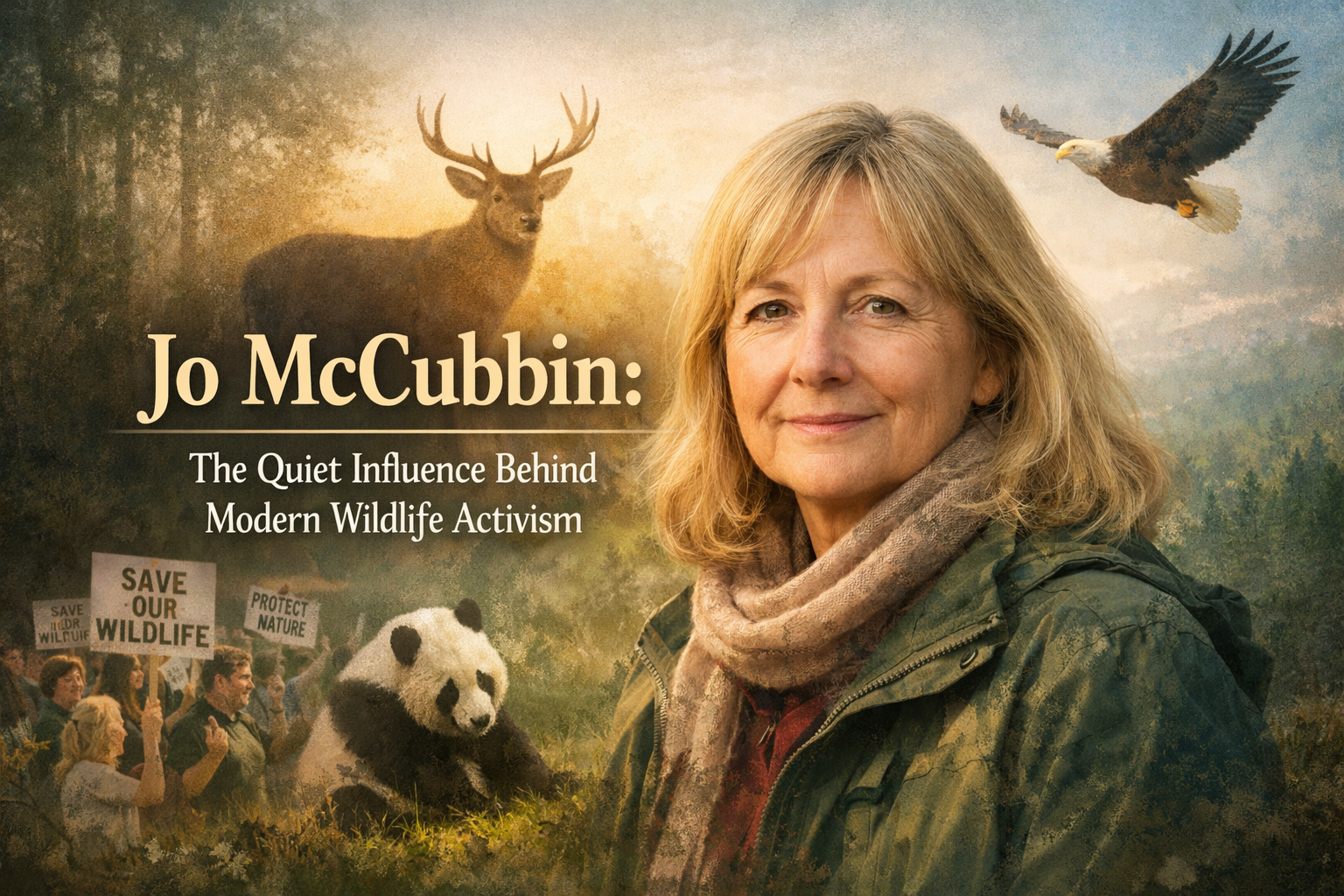
In conversations about environmental activism in the UK, some names dominate headlines and television screens. Others remain intentionally private, shaping movements from behind the scenes. Jo McCubbin belongs firmly to the latter group. While not a public campaigner herself, her influence on wildlife advocacy, conservation awareness, and environmental values has quietly echoed through some of Britain’s most visible green movements.
This article explores Jo McCubbin’s life, values, background, and the lasting impact she has had on environmental thought—without celebrity theatrics, controversy, or noise. Her story is one of influence without spotlight, commitment without slogans, and personal integrity in a world increasingly driven by public validation.
Who Is Jo McCubbin?
Jo McCubbin is best known to the public through her long-term relationship with wildlife presenter and environmental campaigner Chris Packham, but reducing her identity to that association misses the broader picture. Jo McCubbin has always maintained a low public profile, choosing privacy over publicity and principle over platform.
Her life reflects a strong alignment with environmental responsibility, ethical awareness, and a deep respect for nature. Unlike many figures connected to activism, she has never sought public recognition or media attention, which makes her influence more authentic and arguably more powerful.
A Life Rooted in Environmental Values
Jo McCubbin’s worldview reflects a deep appreciation for wildlife and the natural world. Those close to her have often described her as thoughtful, grounded, and deeply aware of humanity’s responsibility toward the environment.
Rather than campaigning in front of cameras, Jo’s contribution has been rooted in personal action—supporting conservation values at home, encouraging environmental awareness within family life, and helping shape conversations around sustainability in everyday contexts. This quieter form of activism often goes unnoticed, yet it forms the backbone of long-term cultural change.
Influence Without the Spotlight
In modern activism, visibility is often confused with impact. Jo McCubbin challenges that idea. Her influence has never relied on speeches, interviews, or viral moments. Instead, it has worked through support, dialogue, and emotional grounding.
Living alongside someone deeply involved in environmental campaigning requires resilience, understanding, and a shared moral compass. Jo McCubbin provided stability and perspective during periods of intense public scrutiny, criticism, and activism. This emotional and ethical support plays a crucial role in sustaining long-term advocacy work, even if it remains invisible to the public.
Motherhood and the Transmission of Values
One of Jo McCubbin’s most meaningful contributions lies in how environmental values are passed from one generation to the next. As a mother, her role in shaping attitudes toward wildlife, ethics, and responsibility has had lasting effects.
Raising children with an awareness of nature, empathy for animals, and respect for the environment creates ripple effects far beyond any single campaign. These values influence future professionals, activists, and citizens who carry forward a mindset of conservation rather than consumption.
Jo McCubbin’s parenting approach reflects patience, curiosity, and encouragement—qualities essential for nurturing long-term environmental awareness in a world dominated by short-term thinking.
Privacy as a Conscious Choice
In an era where personal lives are increasingly commodified, Jo McCubbin’s decision to remain private is deliberate and principled. Privacy, in her case, is not withdrawal but resistance—a refusal to let personal identity become a public product.
This choice reinforces the idea that meaningful impact does not require constant visibility. By staying out of the media cycle, Jo McCubbin preserves authenticity, allowing values to speak louder than branding. This restraint also protects family life from the pressures and distortions that public exposure often brings.
A Different Model of Environmental Contribution
Environmental movements need more than figureheads. They need listeners, thinkers, carers, and stabilizers. Jo McCubbin represents a different but equally necessary model of contribution—one based on consistency rather than confrontation.
Her influence highlights that environmental responsibility begins at home, in everyday decisions, conversations, and values. While public activism drives policy debates, private influence shapes culture. Without cultural change, policy victories remain fragile.
Why Jo McCubbin’s Story Matters
Jo McCubbin’s story matters because it expands the definition of impact. It reminds us that not every contributor to environmental progress will—or should—stand at the front of a protest or behind a microphone.
Her life demonstrates that integrity, emotional intelligence, and ethical consistency can influence movements just as powerfully as speeches or campaigns. In a world obsessed with recognition, Jo McCubbin offers a quieter, more sustainable blueprint for change.
Lessons From a Life Lived Intentionally
There are several lessons to take from Jo McCubbin’s approach to life and influence:
First, privacy can coexist with purpose. Second, support roles are not secondary roles—they are foundational. Third, raising environmentally aware individuals may be one of the most effective forms of activism available.
These lessons are increasingly relevant as burnout, performative activism, and online outrage fatigue challenge modern movements. Jo McCubbin’s example suggests a slower, steadier path forward.
Conclusion
Jo McCubbin may never seek public recognition, but her influence is deeply woven into the fabric of modern wildlife awareness and environmental ethics. Through values, support, parenting, and principled privacy, she represents an often-overlooked form of activism—one rooted in humanity rather than headlines.
In understanding Jo McCubbin, we are reminded that real change does not always announce itself. Sometimes, it grows quietly, steadily, and invisibly—much like nature itself. Visit Website Origin News
